
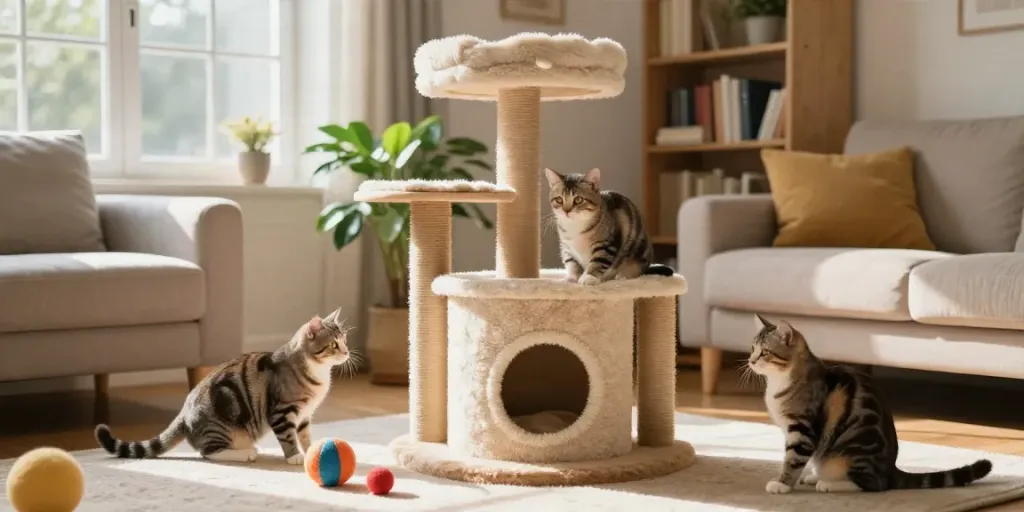
Understanding the Importance of a Cat Tree
As a cat owner, you understand that your feline friends require more than just food, water, and love; they need a space to call their own. This is where the significance of a cat tree comes into play. These structures are designed to mimic a natural environment, providing vertical space for climbing, perching, and exploration. Not only do cat trees cater to the innate instincts of cats, but they also offer numerous benefits for their well-being and happiness.
Why Every Cat Needs a Dedicated Space
Cats are territorial creatures by nature, often seeking out spaces that they can call their own. A dedicated area such as a cat tree allows your cat to establish its territory, making it feel safe and secure. This is particularly important in multi-pet households where competition for space can lead to stress. A cat tree provides an exclusive zone for them to relax, play, and observe their surroundings, helping to reduce anxiety and encourage healthy behavior.
Benefits of Vertical Living for Cats
Vertical living is essential for cats, as they are climbers by nature. In the wild, cats climb trees to hunt, hide from predators, and find the best vantage points. A cat tree replicates this aspect of their natural behavior, offering several advantages, including:
- Exercise: Climbing and jumping on a cat tree helps to keep your cat physically active, which is crucial for maintaining a healthy weight.
- Exploration: The multiple levels of a cat tree encourage curiosity and exploration, stimulating your cat's mind.
- Comfort: Cat trees often include cozy spots for napping, which is essential for your cat's rest and recovery.
How Cat Trees Contribute to Feline Health
Regular physical activity, facilitated by a cat tree, can aid in preventing obesity, which is a common issue among indoor cats. Moreover, the act of climbing helps to strengthen their muscles and maintain joint flexibility. Additionally, many cat trees are designed with scratching posts, which are vital for keeping your cat's claws healthy and preventing them from damaging your furniture.
Choosing the Right Cat Tree for Your Home
When selecting a cat tree, it’s crucial to consider a few key factors to ensure it meets your cat's needs and fits seamlessly into your home decor.
Factors to Consider When Selecting a Cat Tree
Choosing the right cat tree requires evaluating your cat's size, age, and preferences. For instance, larger breeds like Maine Coons may require sturdier structures with wider bases, while younger cats may appreciate more adventurous designs with multiple levels and hiding spots. Other considerations include:
- Stability: Ensure the cat tree is stable enough to support your cat’s weight and movement.
- Material: Look for durable materials that are easy to clean.
- Style: Choose a design that complements your home.
Types of Cat Trees: Which is Right for Your Cat?
There are several types of cat trees available, each catering to different preferences:
- Multi-level Cat Trees: Great for active cats that enjoy climbing.
- Condos and Hideaways: Ideal for shy cats that prefer secluded spaces.
- Wall-Mounted Trees: Perfect for homes with limited floor space, offering vertical space without taking up room.
Space Requirements and Design Options
Before purchasing a cat tree, assess the space you have available. Consider whether you want it to be a prominent feature in your living room or a more discrete addition. Also, think about the layout of your home; some designs may fit better in corners or against walls. The size of the cat tree should align with the dimensions of your space to maintain a balanced aesthetic.
Setting Up Your Cat Tree for Maximum Engagement
Once you’ve chosen the right cat tree, proper setup is key to encouraging your cat to use it frequently.
Placement Tips for Optimal Usage
Position your cat tree in a location that is visible to your cat. Cats love to observe their environment, so placing the tree near windows or in busy areas can pique their interest. Avoid dark corners where the tree may go unnoticed.
Integrating the Cat Tree into Your Living Space
Make the cat tree a part of your home décor rather than a standalone item. Consider matching the colors and style of the tree with your existing furniture. This not only enhances the aesthetics but also helps to normalize the presence of the tree in your home.
Adding Accessories to Enhance Playtime
To further engage your cat, consider adding toys, scratching pads, or interactive elements to the cat tree. These additions can help keep your cat entertained and mentally stimulated. Remember, variety is key; rotating toys and accessories helps maintain their interest over time.
Common Misconceptions About Cat Trees
Despite their popularity, several myths surround cat trees that can deter pet owners from investing in one.
Debunking Myths: Do Cats Really Use Cat Trees?
Many people believe that their cats won’t use a cat tree; however, this is generally not the case. Cats are often hesitant at first but will typically engage once they see it as a part of their environment. With proper placement and encouragement, they are likely to enjoy their new space.
Understanding Preferences: Not All Cats Are the Same
It's essential to recognize that every cat is an individual with unique preferences. Some may love climbing high, while others prefer more secluded spaces. Observing your cat’s behavior can help you tailor their tree to meet their specific needs.
Addressing Concerns: Safety and Stability of Cat Trees
Concerns about safety and stability are valid, especially for larger or more active cats. When investing in a cat tree, always prioritize models that have a firm base and are made from non-toxic materials. Regular inspections for any wear or damage will further ensure safety.
Future Trends in Cat Trees: What to Expect by 2026
The pet furniture industry is continuously evolving, and cat trees are no exception. Keeping an eye on upcoming trends can help you remain informed about the best options for your pet.
Innovations in Design and Materials
Expect to see more sustainable materials being used in cat tree designs. Eco-friendly options made from recycled or natural products are likely to gain popularity, reflecting wider consumer demand for sustainable living.
The Impact of Technology on Cat Furniture
Smart technology is making its way into pet products, and cat trees are no exception. Future designs may include built-in toys that can be controlled via smartphone, enhancing interactivity and engagement.
Emerging Trends in Pet Wellness and Environment
As pet wellness becomes increasingly important, cat trees that incorporate features promoting holistic health will likely rise in demand. This may include areas designed for optimal comfort, stress relief, and even scent diffusion to create calming spaces for your feline friend.
FAQs
Is it worth getting a cat tree?Yes, a cat tree can provide mental and physical stimulation for your cat, contributing to its overall happiness and health.
How do I choose the right size cat tree?Consider your cat's size and weight, as well as the space you have available in your home.
Are cat trees suitable for older cats?Yes, many cat trees are designed with features that accommodate both young and older cats. Look for ones with lower platforms and easy access to climbing areas.
How can I encourage my cat to use the tree?Place the tree in a high-traffic area, use treats and toys to entice your cat, and provide praise when it engages with the tree.
What materials are best for cat trees?Opt for trees made with sturdy materials like wood or heavy-duty cardboard, and ensure they have non-toxic surfaces that are easy to clean.